Pregnancy is a complex multi-phased process; it's not just nine months divided into trimesters. It also involves going into labour, giving birth, and navigating the postpartum period.
Giving birth may seem like the most demanding phase. But every woman is different. While some enjoy pregnancy, others find it physically and emotionally overwhelming. The same goes for delivery and postpartum.
All pregnancy-related processes intersect. The way you give birth will largely determine your recovery path.
Vaginal Birth
The main difference between vaginal and caesarean birth is the way you deliver the baby. Vaginal birth means the baby comes out through a birth canal. Another difference is the timing and duration of going into labour.
Although a woman is familiar with her due date, there is no precise time when the labour will start and how long it will last. It could be up to 24 hours.
Also, some will go through it without any medical assistance. Others might want or need it. These include the use of forceps, an epidural or an episiotomy. Your doctor will decide whether any of these make sense to ensure safe labour.
Key Considerations for Vaginal Birth
Vaginal birth is not just a matter of choice; it's a medical recommendation.
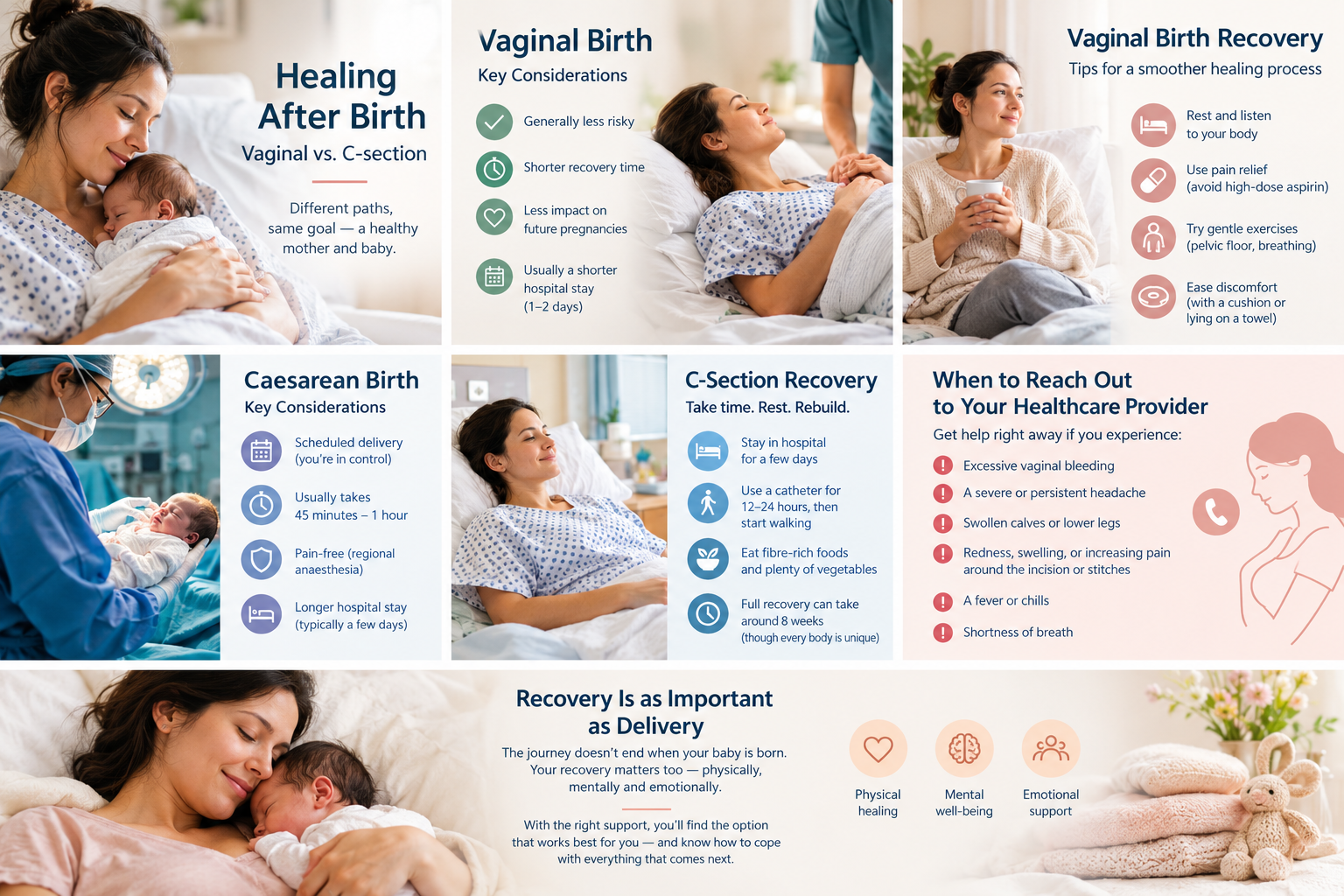
Vaginal birth is considered less risky. It also takes less time to physically recover afterward, and there are fewer medical considerations to take into account when planning future pregnancies.
Another significant reason is the entire experience. While it can be quite intense and (to be honest) painful, some women are looking forward to feeling every pregnancy-related sensation.
Although the duration of labour is unpredictable, once you give birth, your baby and you will not stay long in the hospital. If everything is ok, you'll typically be discharged from the hospital within a day or two.
Vaginal Birth and Recovery
Regardless of how you gave birth, your body has undertaken immense physical and emotional work, and it needs rest. This is particularly important when a specific medical intervention/assistance was performed.
If, for instance, you got some tearing, or the doctor performed an episiotomy, your body will need more time to heal. Giving birth will disrupt many of your regular physiological functions - you'll need time to regain bladder and bowel strength.
Your movement will feel restricted, too. In the first weeks after giving birth, you will want to control the pain or eliminate it completely. Once the discomfort loosens, perform gentle exercises, like pelvic floor contractions or light breathing, to aid your recovery.
Taking medications such as paracetamol or ibuprofen is safe while breastfeeding. High-dose aspirin is not. Still, before taking any medication, consult a pharmacist, midwife, or doctor.
If you get some stitches, they will dissolve naturally. However, the place where the wound was may feel sensitive. You can do the following to ease the discomfort: uncover stitches and lie on a towel, a couple of minutes, a few times a day. Alternatively, use a doughnut cushion to lower the pressure on the perineum while sitting.
Caesarean Birth
Caesarean or C-section is an alternative to vaginal birth. It's a delivery option but also a major abdominal surgery. The doctor makes an incision through your lower abdomen and uterus. The abdominal muscles are separated to reach the baby safely.
Key Considerations for C-Section
First, it gives women control. Unlike vaginal birth, where you don't know when the labour will start, C-sections are scheduled.
Second, aside from knowing the exact day your baby will arrive, you also know how long it will last. Standard C-sections typically take between 45 minutes and an hour.
And lastly, the lack of pain. You receive regional anaesthesia (epidural) which keeps you awake but prevents feeling pain. Once the baby is out, and the incision is closed, you will be taken to the recovery room.
C-Section and Recovery
With a C-section comes a longer recovery. You will spend more days in the hospital, while the overall physical healing lasts around eight weeks. We must always keep in mind that every body is unique and these timelines are just a ballpark, not something a new mother should stress about.
While in the hospital, you will have a urinary catheter for the first 12 to 24 hours. Once they remove it, they will encourage you to get up on your feet and walk around the room to improve circulation, prevent sore muscles and breathe better.
At home, make sure to rest a lot and collect strength to take care of your baby. Nurture your body properly. Include plenty of vegetables and high-fibre foods in your diet. It is important to make your bowel and bladder's job easier.

When to Reach Out to Your Healthcare Provider
Physical, let alone mental and emotional healing, will not happen overnight. Give yourself time and grace.
But if at any moment you feel discomfort or the following:
Excessive vaginal bleeding
A severe or persistent headache
Swollen calves or lower legs
Redness, swelling, or increasing pain around the incision (C-section) or stitches (vaginal birth)
A fever or chills
Shortness of breath
Don’t hesitate to contact your midwife, obstetrician, or GP immediately. You don't want "minor" difficulties to turn into long-term health issues.
Recovery Is as Important as Delivery
The nine months of pregnancy put you through a lot. From nausea, morning sickness to constant exhaustion, sleep deprivation and mood swings. It's a real roller coaster.
It's completely understandable why women think so much about delivery and all the struggles that come with it. They want to minimize upcoming discomfort as much as possible, and so they often neglect the importance of preparing for the days after.
Delivery and recovery are equally important. Each carries its own set of challenges, but with the right professional and emotional support, you'll know what option works best for you and how to cope with everything it brings.
IMPORTANT NOTICE – Image source credits: All visuals and images within the article created via generative AI tools (Chagpt – Gemini). Editorial prompt and concept by Alex Petrovic (September 2026).